
RUISLIP · HA4 · AVAILABLE 24/7
Cockroach Treatment Ruislip
Cockroach treatment needs a clear picture of the species, harbourages and routes through the premises. We inspect accessible warm or sheltered areas, discuss food protection and agree a targeted plan with monitoring. Tell us where insects appear and what has already been done before adding another product.
01
IDENTIFY SPECIES
Confirm the insect and its pattern
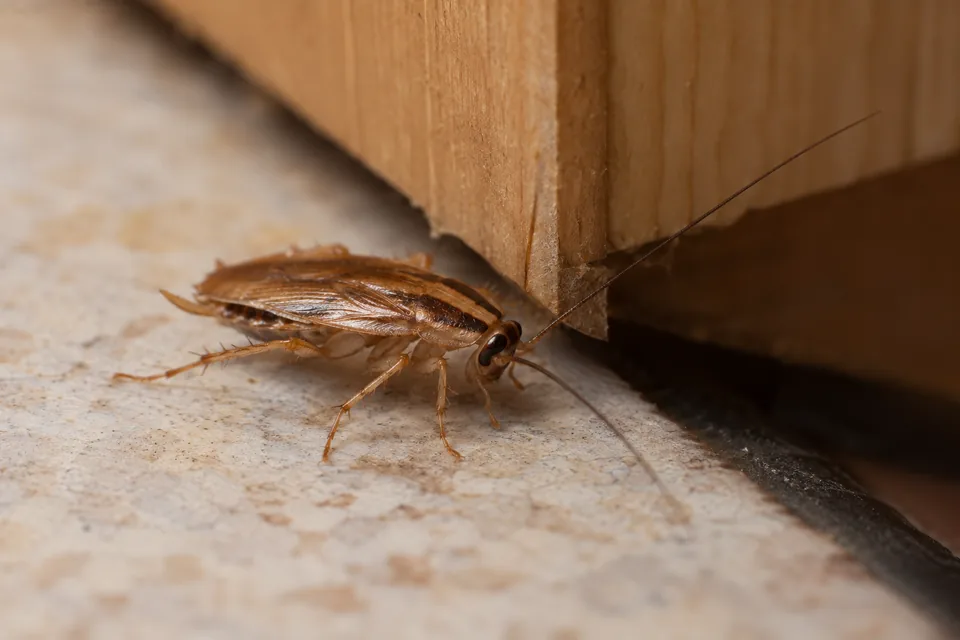
The insect and associated signs are assessed together. Species, locations and times of sightings help determine which areas deserve attention rather than assuming every kitchen insect needs the same response.
- Compare insects with the reported locations
- Note sightings around warmth and moisture
02
FIND HARBOURAGES
Follow shelter behind the fittings
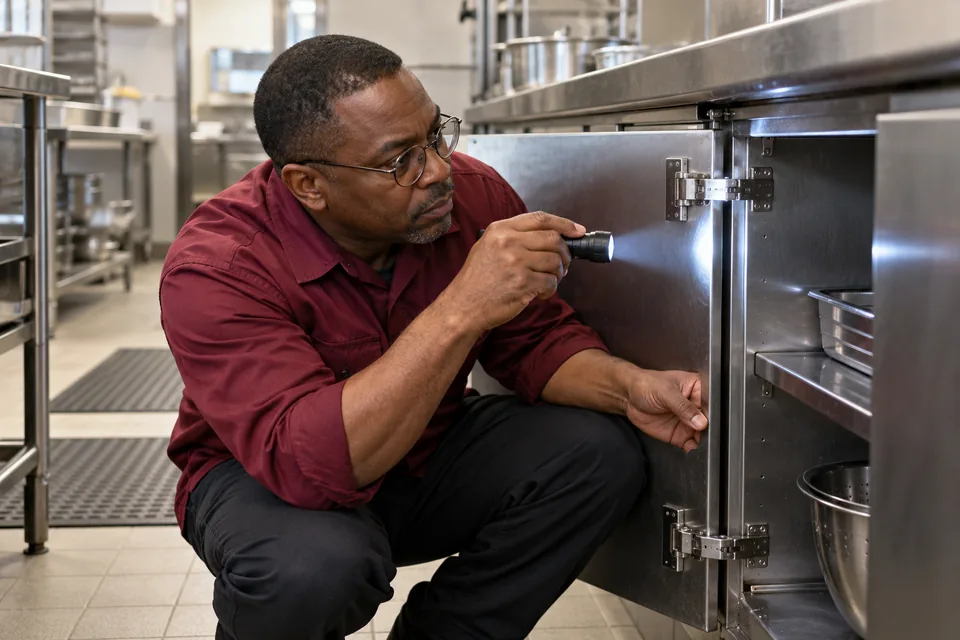
We inspect accessible appliance spaces, cupboard edges and service routes where the findings point. The survey records limits when fixed equipment or neighbouring areas cannot be reached safely.
- Inspect accessible appliance voids and hinges
- Map relevant service routes and harbourages
03
TARGET CONTROL
Treat the relevant activity areas
The chosen approach considers the infestation and property use. Preparation, product placement where appropriate, and cleaning restrictions are explained so treatment can work alongside food and moisture management.
- Agree placement around the assessed activity
- Protect utensils and food before treatment
04
READ MONITORING
Review the pattern after treatment
Dated observations and any placed monitors help compare activity over time. We discuss whether remaining signs point to further harbourage, an access issue or a condition needing separate attention.
- Compare monitor findings with sighting notes
- Report activity moving into another area
WHERE AND WHEN ACTIVITY OCCURS
Establish a baseline before judging progress
Tell us where cockroaches have been seen and whether sightings cluster around one fitting or occur in several rooms. Note the time, whether lights had just been switched on and any pattern around deliveries or equipment use. These observations help direct an inspection. A single account that insects are everywhere is harder to assess than a short list of locations and dates.
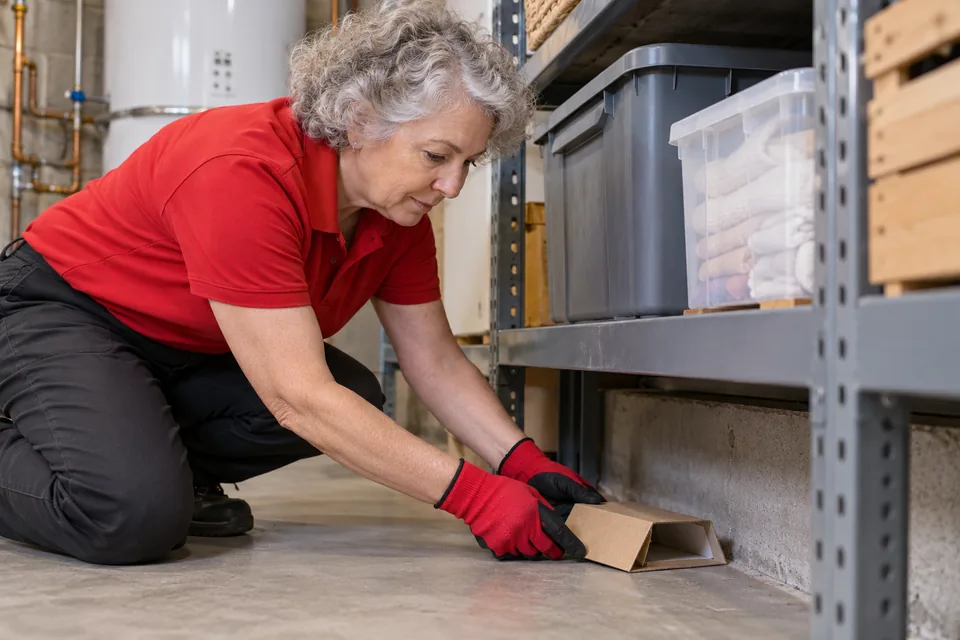
If monitoring is appropriate, its purpose is explained as part of the plan. A monitor can help locate activity and compare findings, but placement and interpretation matter. Do not move one to a different room simply because that location is more convenient. The original position, accessibility and any disturbance should remain part of the record used at the review.
| Observation | Detail to report | How it helps the inspection |
|---|---|---|
| Repeated appliance sightings | Equipment and exact edge involved | Directs attention to accessible warm shelter |
| Insects in several rooms | Dates and room locations | Helps assess distribution and connecting routes |
| Associated material | Position of droppings or egg cases | Adds context for identification and harbourage |
| Previous control work | Product, position and date if known | Helps interpret activity and plan compatibility |
APPLIANCES, FIXTURES AND SERVICE ROUTES
Inspect the spaces ordinary cleaning misses
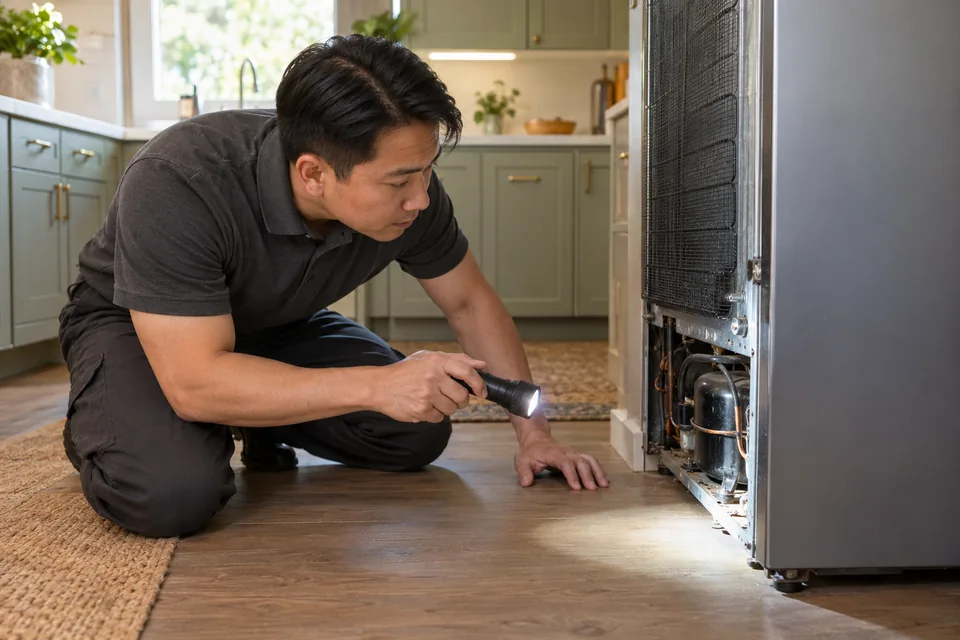
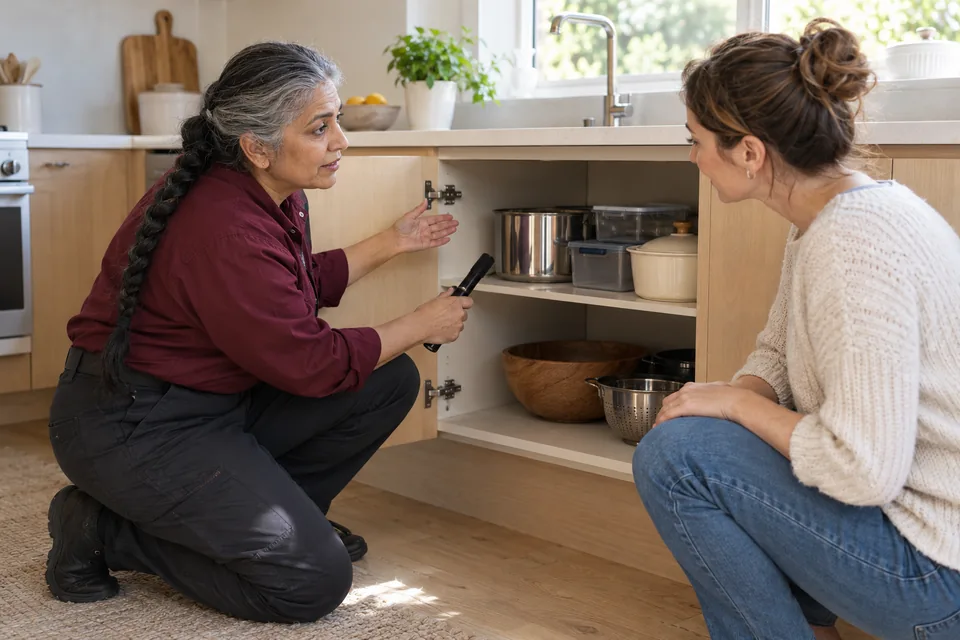
A kitchen can look clean while providing inaccessible shelter behind equipment. Depending on the species and findings, the technician may examine accessible cupboard hinges, appliance edges, pipe routes, utility spaces and other relevant gaps. A torch and inspection tools help see into sheltered positions without treating every crack as an established harbourage. Moisture, warmth and available food are considered alongside the physical evidence.
Explain which appliances are freestanding and which are fixed, connected or too heavy to move safely. Do not disconnect a gas appliance or open electrical equipment for the inspection. If an important void cannot be reached, we record the limit and discuss how access could be arranged appropriately. Treatment of the visible room alone cannot establish what is happening inside every concealed service space.
If the insect is a silver, tapered bathroom visitor rather than a cockroach, compare Silverfish Control Ruislip ↗
A COCKROACH IS NOT A COMPLETE DIAGNOSIS
Identification changes the search
Different cockroaches can use different parts of a property, so identification helps avoid a search that is too narrow. An insect found near a sink does not mean the whole problem begins at that sink. Associated droppings, shed material or egg cases may help locate activity, but the technician still needs to assess how findings relate to the layout and recent history.
Give details of previous treatment, refurbished rooms, second-hand equipment and items recently brought into the premises. In a flat or shared building, also explain access to communal areas and who manages connected service routes. We do not assume a neighbouring property is the source without evidence. If wider access is relevant, the proposal should make clear who needs to arrange it and what remains uncertain.
FOOD, ACCESS AND COMMUNICATION
Prepare the working area without disrupting evidence
The preparation advice should match the inspection and proposed method. You may need to clear specified cupboards, protect utensils or make an appliance edge accessible. Ask exactly which areas to prepare instead of emptying every cupboard into another room. Tell us if staff, tenants or another person will be responsible for the tasks so the same instructions reach everyone involved.
Cleaning and treatment need to be coordinated. Removing food debris and dealing with waste are useful parts of a wider plan, but washing a treatment point or moving monitors can interfere with the intended work. Establish what should happen before the appointment and what should wait until afterwards. If a preparation task cannot be completed, explain it before the technician arrives.
Protect food and contact items
Discuss open food, utensils, preparation surfaces and stored packaging. Follow the directions for the chosen treatment and keep protected items away from the work area. In a business, make sure the person responsible for food safety receives the advice.
Disclose previous sprays and cleaning products
Tell the technician what has been used and where, including recently applied aerosols. Keep the product information if possible. Do not add another treatment to a proposed bait or monitoring area without discussing whether it could affect the plan.
Where kitchen evidence also includes larger droppings or gnawing, see Rat Control Ruislip ↗
SELECT THE APPROACH AFTER SURVEY
Targeted work alongside source management
A suitable control approach depends on species, extent, access and how the premises are used. Monitoring and physical changes may sit alongside appropriately selected products. Where a bait or other targeted placement is proposed, the technician explains its purpose and which areas need to remain undisturbed. A general spray throughout a kitchen is not a substitute for understanding the harbourages and the conditions supporting activity.
At the visit, preparation is checked and the findings are compared with the proposed scope. A new affected area or an access restriction may require a revised discussion before work proceeds. Keep people and animals away as directed, and follow any product-specific re-entry or ventilation instructions. This page cannot give one waiting period that applies to every material, method and occupied space.
MONITORING WITH A PURPOSE
Check what remains active at review
Some cockroach activity can continue while a treatment is working or as different life stages emerge. Ask what to expect for the chosen method and what findings should prompt a call. Record new sightings by date and precise location, especially if insects appear beyond the original area. Do not judge the whole plan from one observation without comparing it with the inspection and treatment record.
The review can identify a placement problem, inaccessible harbourage, continuing food or moisture source, or movement through a route not previously accessible. Explain any cleaning, equipment replacement or building work since the visit. Further action should respond to that information rather than simply repeat the original application without reassessment. The quotation and visit record should make clear which review arrangements have been agreed.
To review the wider inspection approach and services, return to Pest Control Ruislip ↗
| After-treatment finding | Question to examine | Possible next step |
|---|---|---|
| Activity at the original fitting | Has access or treatment placement changed? | Review the inspected harbourage and records |
| Sightings in a new room | Is there a connecting or newly accessible route? | Discuss the additional inspection scope |
| Monitor has been moved | Can its results still be compared? | Restore a meaningful monitoring record |
| Leak or waste issue remains | Who is arranging maintenance or housekeeping? | Coordinate those actions with the pest plan |
KEEP RESPONSIBILITIES CLEAR
Homes and food businesses need different arrangements
In a home, tell us who uses the kitchen and whether food, pet supplies or belongings can be stored away from the affected area during work. Identify anyone unable to follow a planned access restriction. A landlord or managing agent may need to arrange shared access or repairs, and those tasks should not be assumed to form part of a room treatment.
For a food business, the responsible manager needs to address the food-safety implications as well as treatment access. Explain operating hours, deliveries, equipment use and who can authorise changes. Keep the pest findings and actions within your own food-safety arrangements and obtain appropriate advice about affected food or operations. A pest visit does not replace the business operator’s responsibilities or establish that every part of the premises is safe to use.
QUOTE THE WORK, NOT JUST THE INSECT
Cockroach treatment from £184
The starting price is £184. The scope depends on species, affected areas, appliance access, the selected method and monitoring or visits agreed. Ask for the total payable, the areas included and the basis for any later work. Separate repairs, specialist access or investigation of connected spaces need to be discussed rather than presumed to be covered by the starting amount.
Our telephone service is available 24/7 for cockroach concerns in Ruislip, including activity affecting food handling or an occupied kitchen. Give the postcode, premises type, locations and any previous action. We discuss the appropriate assessment and confirm appointment availability during the call. Before advice, keep food protected, restrict contact with affected areas and avoid dismantling equipment or applying another product around the suspected harbourage.
For access arrangements and an assessment of the affected premises, use Contact Us ↗
Questions about cockroach treatment
Does seeing one cockroach mean every room is infested?
Not necessarily. The species, location and associated evidence need assessment before the extent can be established. Tell us where the insect was seen and preserve a clear photograph if possible. Avoid moving equipment or applying products throughout the property on that observation alone.
Why inspect behind an appliance that looks clean?
The visible surface may not show the sheltered space behind or beneath it. Depending on the findings, warmth, moisture and small gaps can be relevant to the survey. Access must be safe; we do not ask customers to disconnect fixed gas or electrical equipment.
Should I wash away every treatment placement?
Follow the cleaning instructions for the actual method used. Some places need to remain undisturbed for a stated purpose, while ordinary food hygiene continues elsewhere. Ask which areas can be cleaned and when, and make sure anyone cleaning the premises receives the same advice.
Can activity in another flat affect my treatment?
It may be relevant, but a shared wall does not establish a source. Describe what is known and who manages communal areas or service routes. Wider investigation may require coordinated permission and access; treatment in one flat cannot confirm conditions throughout the whole building.
Will a monitoring device remove the whole infestation?
Monitoring primarily helps show where activity occurs and how it changes. Its role within the treatment plan should be explained. Do not assume a device alone addresses every harbourage or supporting condition, and do not move it without telling the technician who will interpret the findings.
What should a restaurant manager tell you first?
Describe the affected equipment, food-handling areas and operating restrictions, along with the signs and any previous treatment. Identify the person responsible for authorising work and food safety. We can then discuss inspection access, while the business manages its responsibilities for affected food and operations.
Discuss the signs at your property
Call our 24/7 service on +44 20 3966 2607. We will discuss the information needed for an inspection and confirm appointment availability.